Introduction
Advanced epithelial ovarian carcinoma frequently presents with extensive peritoneal dissemination
and, in selected cases, pleural involvement (FIGO stage IVA), posing significant therapeutic
challenges. Cytoreductive surgery (CRS) remains the cornerstone of management, with
completeness of cytoreduction (CC-0) being the most important prognostic factor. Hyperthermic
intraperitoneal chemotherapy (HIPEC) enhances drug penetration and cytotoxicity through
hyperthermia, while hyperthermic intrathoracic chemotherapy (HITOC) extends similar benefits to
pleural disease. Together, these modalities provide comprehensive treatment of both abdominal
and thoracic compartments, targeting residual microscopic disease and improving oncologic
outcomes.
Case Report
A 59-year-old postmenopausal hypertensive female (ECOG 0) presented with abdominal pain and
was diagnosed with FIGO stage IVA high-grade serous ovarian carcinoma. Baseline CA-125 was
markedly elevated (4500 U/mL). PET-CT demonstrated bilateral adnexal masses, extensive
abdominopelvic peritoneal deposits, omental involvement, nodal metastases, ascites, and
right-sided pleural disease. Ultrasound-guided omental biopsy confirmed high-grade serous
adenocarcinoma.
The patient received neoadjuvant chemotherapy with weekly paclitaxel and carboplatin, achieving
significant biochemical and radiological response, with normalization of CA-125 (28 U/mL) and
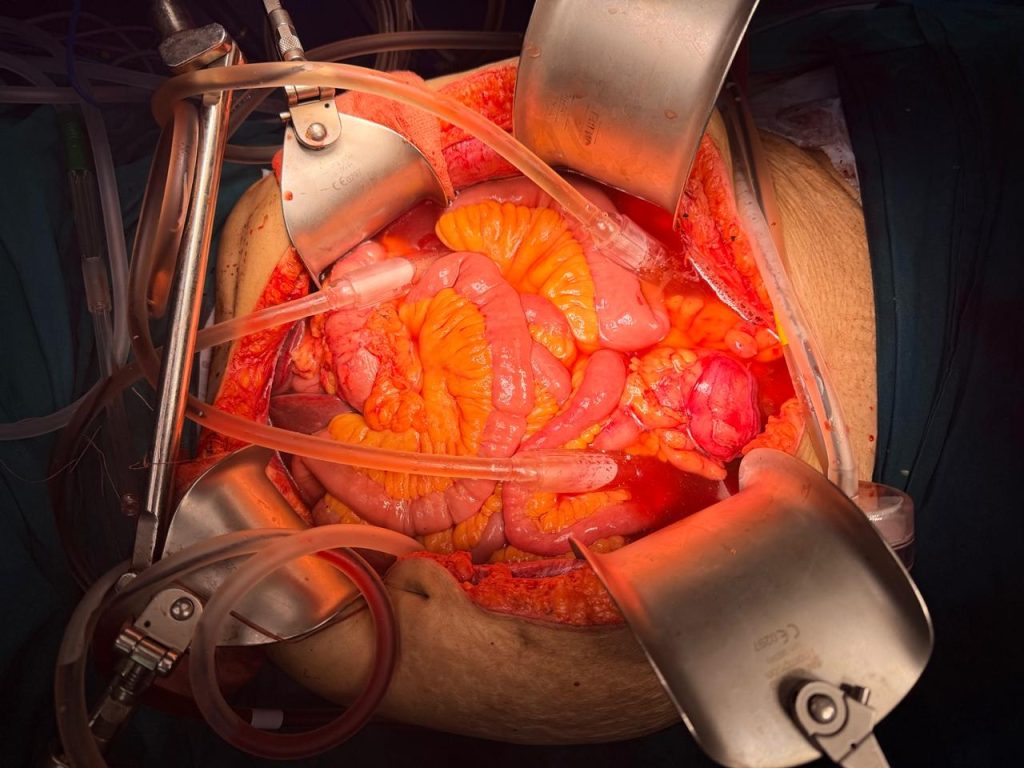
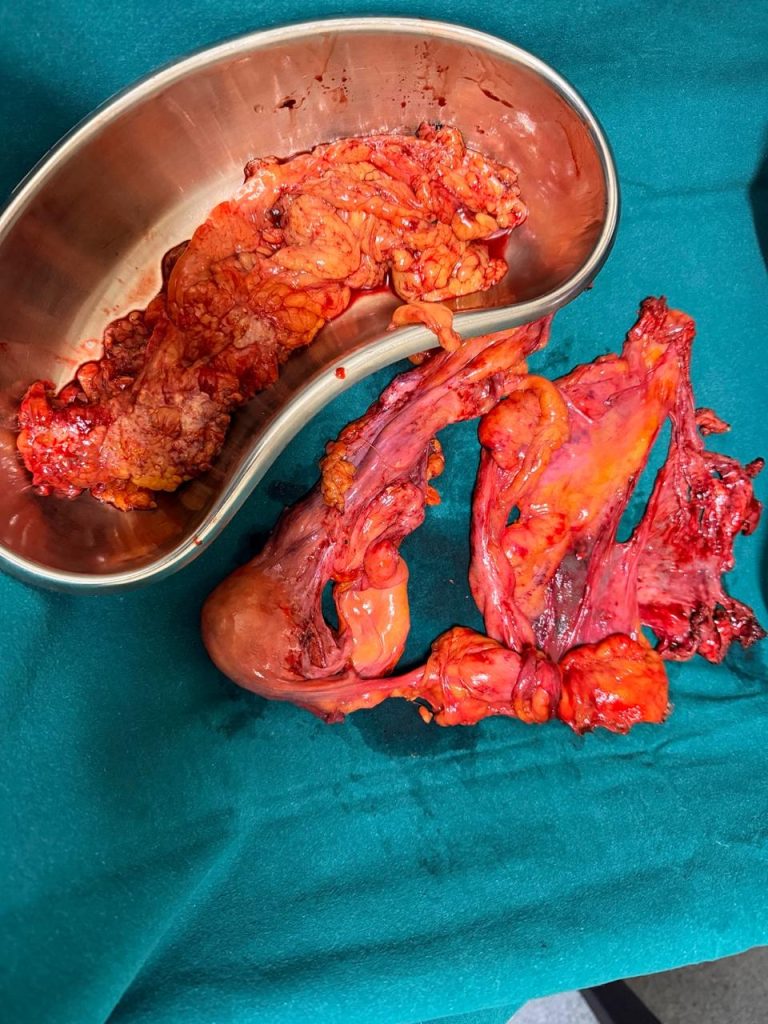
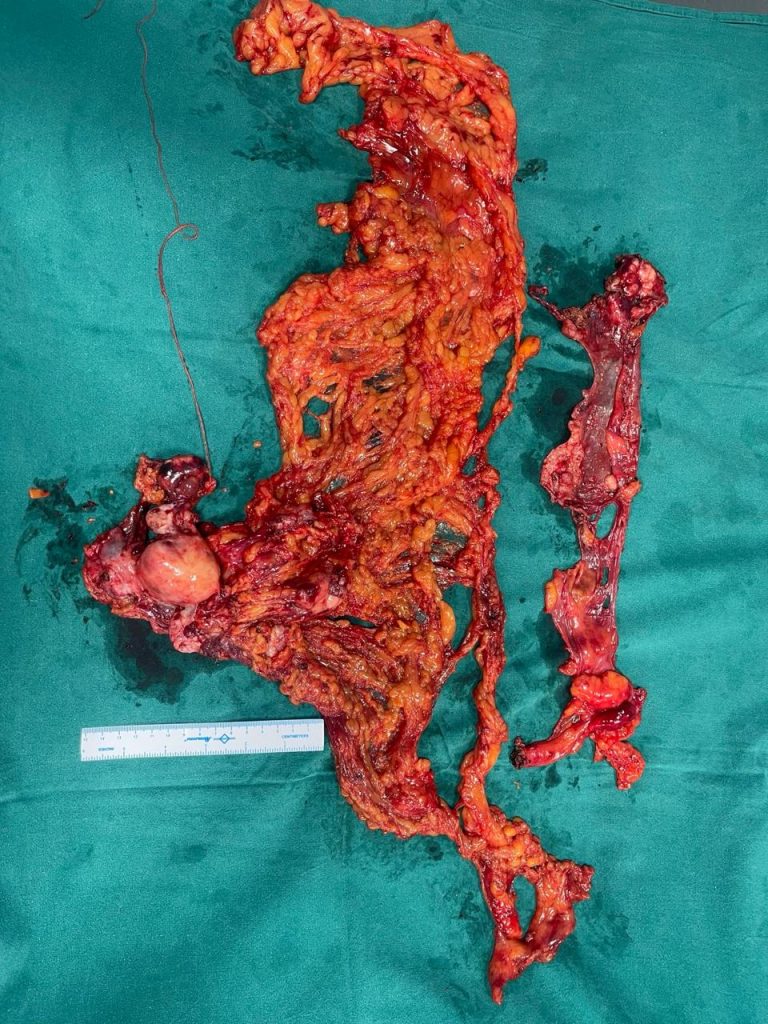
near-complete metabolic resolution. She subsequently underwent interval cytoreductive surgery
achieving CC-0 resection, including total abdominal hysterectomy with bilateral
salpingo-oophorectomy, peritonectomy, total omentectomy, bilateral pelvic lymph node dissection,
retroperitoneal lymph node dissection, periportal nodal clearance, and transdiaphragmatic
VATS-assisted right pleurectomy. This was followed by HIPEC (cisplatin-based, ~42°C for 60–90
minutes) and HITOC to target residual microscopic disease. The postoperative course was
uneventful.
Discussion
Emerging evidence supports the integration of CRS with HIPEC in selected patients with advanced
ovarian cancer, demonstrating improvements in disease-free and overall survival. Hyperthermia
enhances cytotoxicity, increases drug penetration, and induces tumor apoptosis. The addition of
HITOC enables simultaneous management of pleuroperitoneal disease, providing comprehensive
regional control. Sequential multimodal therapy—neoadjuvant chemotherapy, optimal
cytoreduction, and regional hyperthermic chemotherapy—facilitates improved clearance of both
macroscopic and microscopic disease. Current literature suggests this approach is feasible with
acceptable morbidity and may reduce recurrence rates in carefully selected patients
Conclusion
This case highlights the effectiveness of a comprehensive multimodal strategy combining CRS,
HIPEC, and HITOC in advanced ovarian carcinoma with pleuroperitoneal involvement. Achieving
CC-0 cytoreduction remains critical, while regional hyperthermic chemotherapy enhances disease
control by targeting residual microscopic disease. This evolving approach demonstrates promising
outcomes and supports its role in selected patients with advanced-stage disease.
References